Blog
How Custom Cable Assemblies Are Designed, Tested, and Manufactured

Ever had a project grind to a halt because a generic cable just couldn’t handle the heat—literally or figuratively? You’re not alone; countless engineers and manufacturers face this frustration when off-the-shelf options fail under specific conditions like extreme temperatures or high vibration. In this post, we’ll walk you through the complete journey of custom cable assemblies, from initial design to final shipment, showing you how partnering with experts—like those offering top-tier cable assembly China services—solves these headaches with precision-engineered solutions that boost reliability and cut downtime.
The Design Phase: Building Your Cable from Scratch
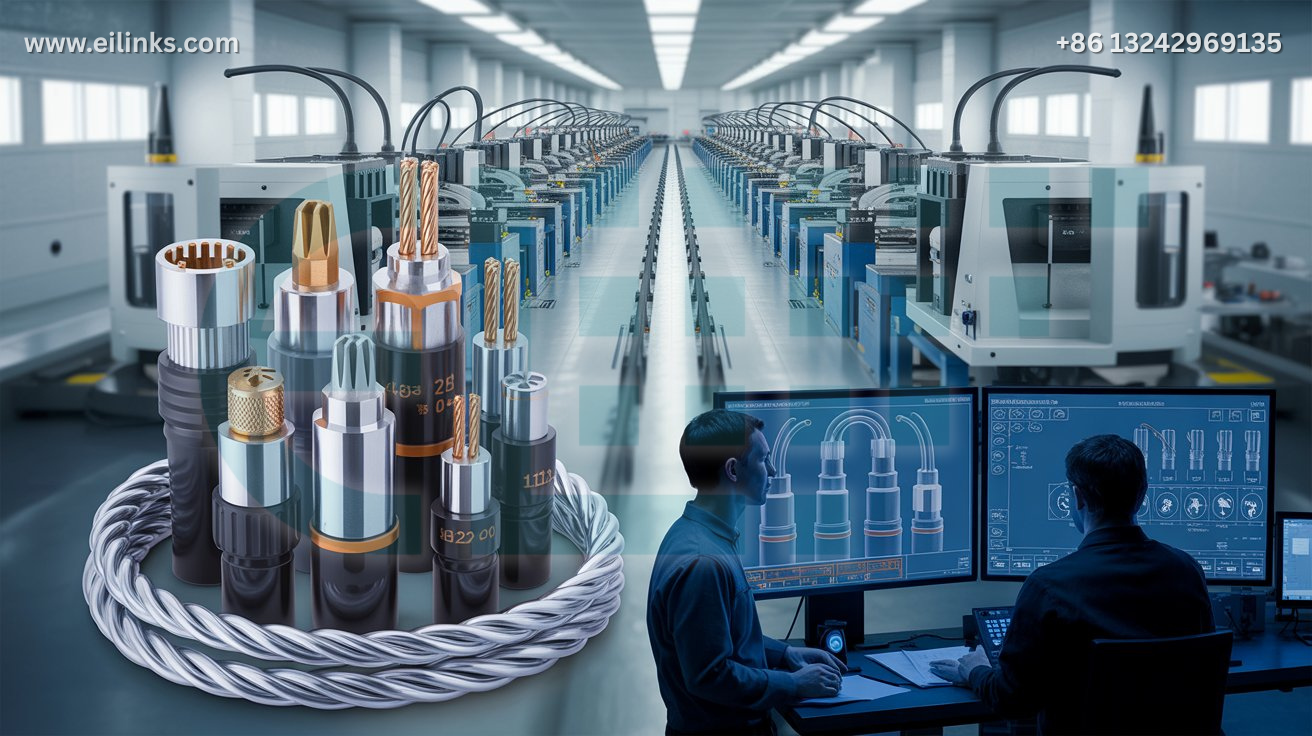
Imagine sketching out a cable that perfectly fits your wildest specs— that’s where design kicks off. Engineers start by diving deep into your needs: environmental stresses, signal integrity, and mechanical demands. They select wires, insulation, shielding, and connectors, often using 3D modeling or virtual simulations to prototype without wasting materials.
Here’s what typically happens:
- Gather requirements: Discuss voltage, length, flexibility, and compliance standards like IPC/WHMA-A-620, the gold standard for cable assemblies covering everything from crimping to labeling.
- Material picks: Choose insulation for durability (e.g., PVC for flexibility or Teflon for high heat) and shielding to fight EMI—crucial in telecom or medical gear.
- Prototyping: Whip up a sample to tweak before scaling. I once heard from a client whose drone cable prototype saved their project after failing vibration tests—talk about a close call!
This phase ensures your cable isn’t just functional but future-proof. Pro tip: Share detailed drawings early to avoid costly revisions.
Material and Connector Selection: The Heart of Durability
Picking the wrong materials is like building a house on sand—it crumbles under pressure. For custom cable assemblies, this step focuses on resilience: jacketing for abrasion resistance, conductors for low resistance, and fillers for shape stability.
Key choices include:
- Wires and shielding: Twisted pairs reduce crosstalk; braids or foils block interference.
- Connectors: Must match your setup—M12 for sensors, D-Sub for industrials—while hitting IP67 ratings for dust/water.
- Regulatory nods: RoHS for eco-friendliness, UL for safety.
In cable assembly China, manufacturers shine here thanks to vast supply chains and economies of scale, slashing costs without skimping quality—China’s market hit $96.66 billion domestically in 2024. Check out our wire harness page for more on sourcing these essentials.
Manufacturing: From Wires to Wow
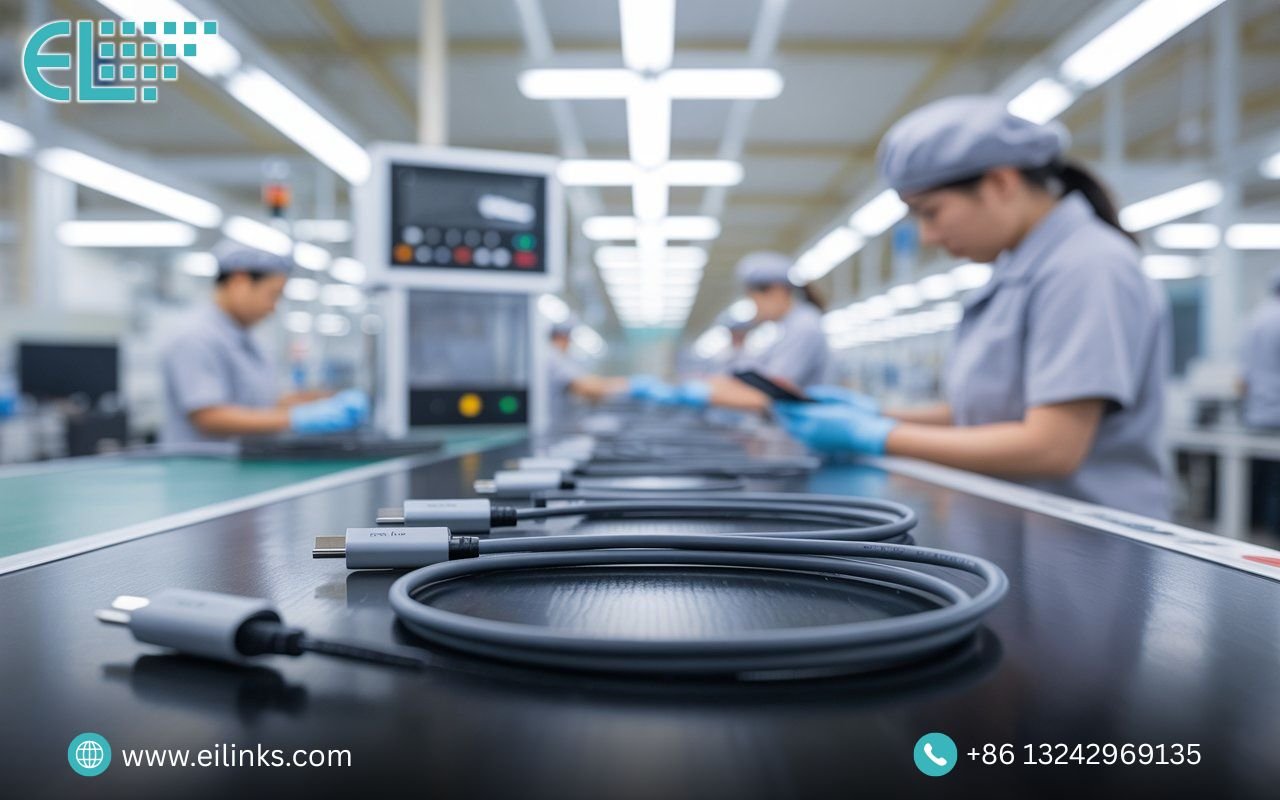
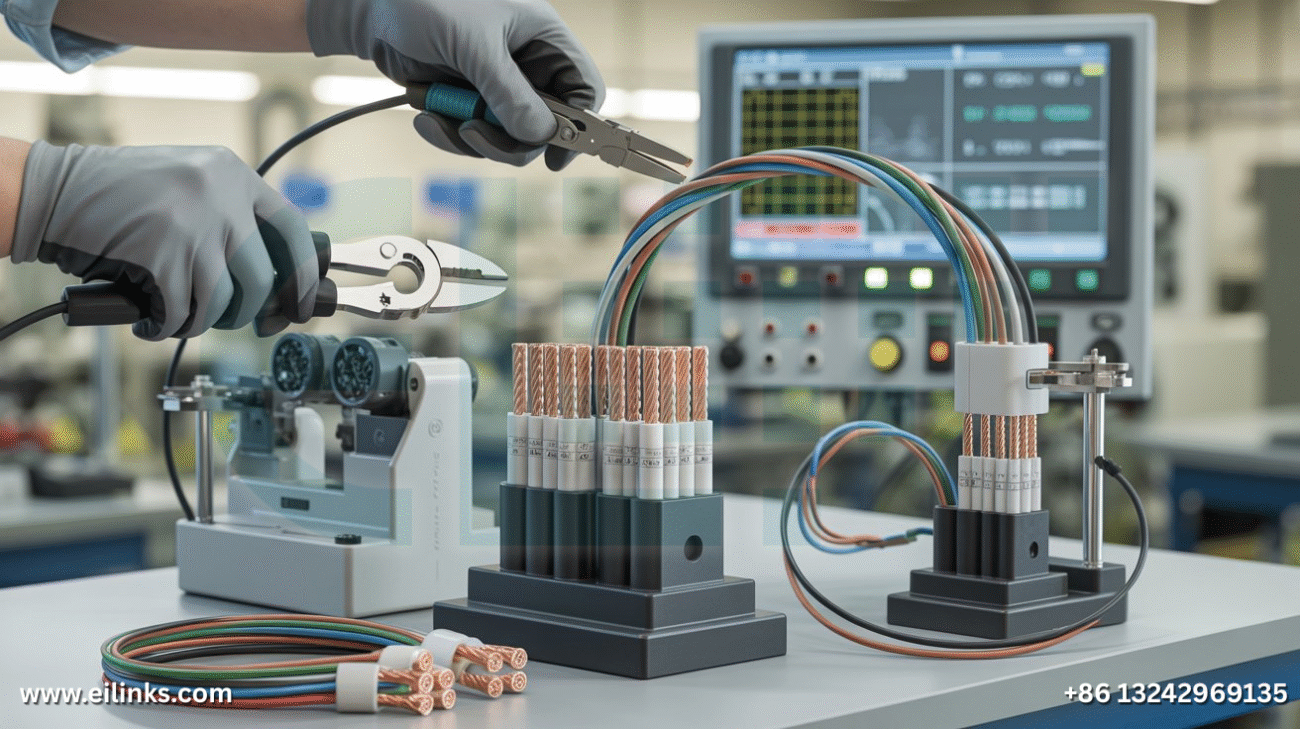
Now the fun (and precise) part: assembly. Wires get cut, stripped, crimped, and bundled in clean facilities, often automated for consistency.
The core steps:
- Wire prep: Automated cutters strip ends to exact specs.
- Crimping/soldering: Calibrated tools attach terminals—pull tests verify strength.
- Bundling and jacketing: Twist, shield, extrude outer layers for protection.
- Overmolding/potting: Seal ends for waterproofing, hitting IP68 if needed.
Humor alert: One factory I toured had robots crimping faster than a caffeinated squirrel—efficiency at its finest! China’s edge? Massive output keeps prices low while advanced lines ensure precision. The global market, valued at $217.6 billion in 2026, grows at 7.19% CAGR, driven by IoT and EVs.
For complex jobs, learn more in our custom solutions guide.
Rigorous Testing: No Weak Links Allowed
Testing isn’t optional—it’s your safety net. Custom cables undergo electrical, mechanical, and environmental checks to meet IPC/WHMA-A-620 classes (1 for general, 3 for high-reliability).
Common tests include:
- Continuity/resistance: Multimeters or Cirrus automated testers zap for faults.
- Hi-pot: High voltage to detect insulation breakdowns.
- Environmental: Vibration, humidity, salt spray—simulating real-world abuse.
- Signal integrity: Crosstalk, insertion loss via time/frequency domain scans.
A “golden sample” programs testers for batch consistency. Real talk: Skipping this doomed a friend’s medical device prototype—don’t be that guy. For credibility, see IPC’s official standard details here or WHMA insights here.
Why China Leads in Cable Assembly—and What It Means for You
China dominates with 39.4% global share, thanks to scale, innovation, and integrated chains. Manufacturers like those in Shenzhen pump out high-volume orders fast, blending low costs with RoHS-compliant quality. The market’s booming—projected to hit $331.55 billion by 2032.
But it’s not just price; it’s expertise in custom tweaks for EVs, robotics, and more. Pair this with partners like EILinks for seamless US-China coordination.
Wrapping It Up: Your Path to Perfect Cables
Custom cable assemblies transform chaos into reliability through thoughtful design, smart materials, precise manufacturing, and bulletproof testing. You’ll dodge failures, meet specs, and scale effortlessly—especially tapping cable assembly China‘s prowess.
Ready to build yours? Contact our team at www.eilinks.com for a free consult, or drop your challenges in the comments—we’d love to chat!